The First Pipe Organs and Early Musical Practices
The Lutheran Church experienced exponential growth during the second half of the nineteenth century, the LCMS itself claiming sixteen congregations in Texas by 1884 and expanding to sixty-four by 1906, the largest being St. Paul, Serbin, with 632 baptized members, followed by its nearby daughter congregation, Holy Cross, Warda, numbering 610 souls. Holy Cross had been formed in 1873 at the prompting of Jan Kilian’s former organist, Carl Teinert, and after a brief stint in the Texas Synod, it was formally accepted into the LCMS in 1874. Holy Cross in Warda was the site of the first pipe organ in an LCMS church in Texas. Built by John George Pfeffer, this St Louis builder found his way into Lutheran circles and it was soon said of him, “a St. Louis pastor in the pulpit and a Pfeffer organ in the gallery was the test of sound Lutheranism.”
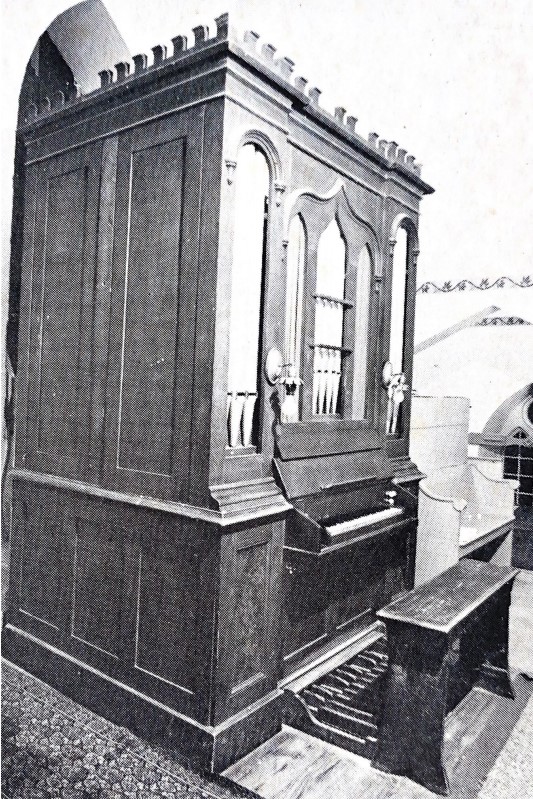
Texas organbuilder Ed Pfeifer (not to be confused with the builder Pfeffer) built an organ for St. Paul’s, Serbin, in 1904, fulfilling a 50-year dream the congregation (and Kilian) had nurtured. This organ, with its Victorian stenciling, is still played at the Serbin church. (Click here for more information about this organ.)
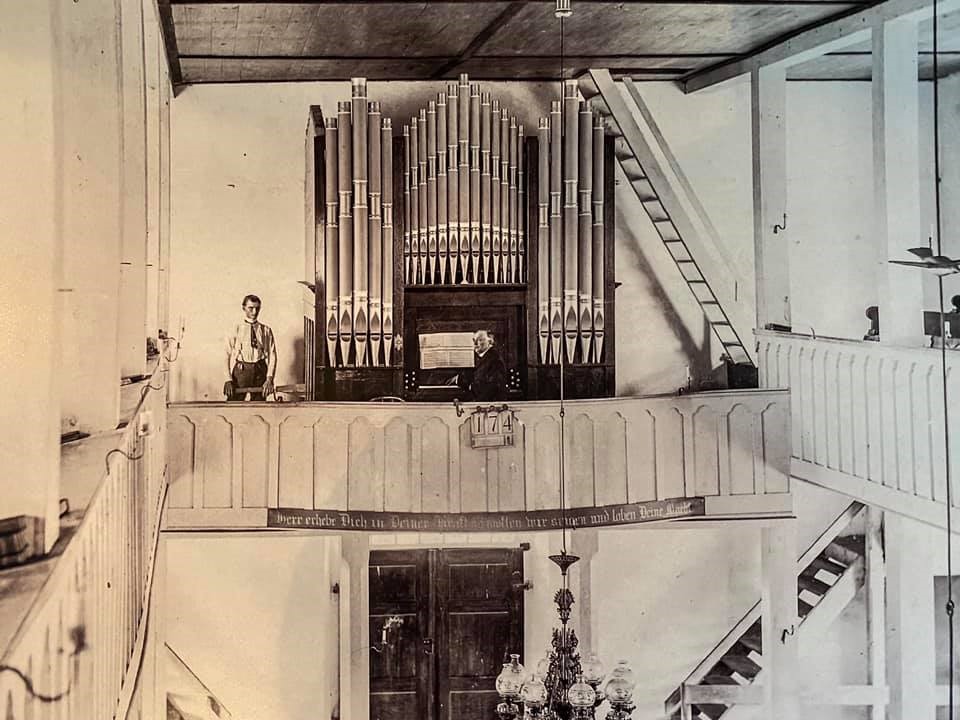
As Lutheran churches proliferated and grew, musical instruments were favored items to install. The records of St. John’s Lutheran Church in Paige, Texas, a Texas Synod congregation, indicate that “the first year after organization [1884] was a busy one for St. John’s. . . [including] ordering hymnals and church benches, buying a piano and cistern and building an outhouse.” A musical instrument was as integral to good church functions as an outhouse! Organs were crucial to congregational singing, if for no other reason to keep the pitch. At the German Lutheran Church in Round Top, Fayette County, Texas, one parishioner recalled in 1931, “When our church was first organized we had no organ. The Reverend Krapf was a fair musician; it was up to him to give the beginning note in the song. On one particular Sunday his first note was entirely too high; one by one the singers dropped out—they couldn’t make it, but one valiant soul, Mother Brinker, kept up the struggle. . . . By superhuman effort she screeched out High C, and then sat down.”

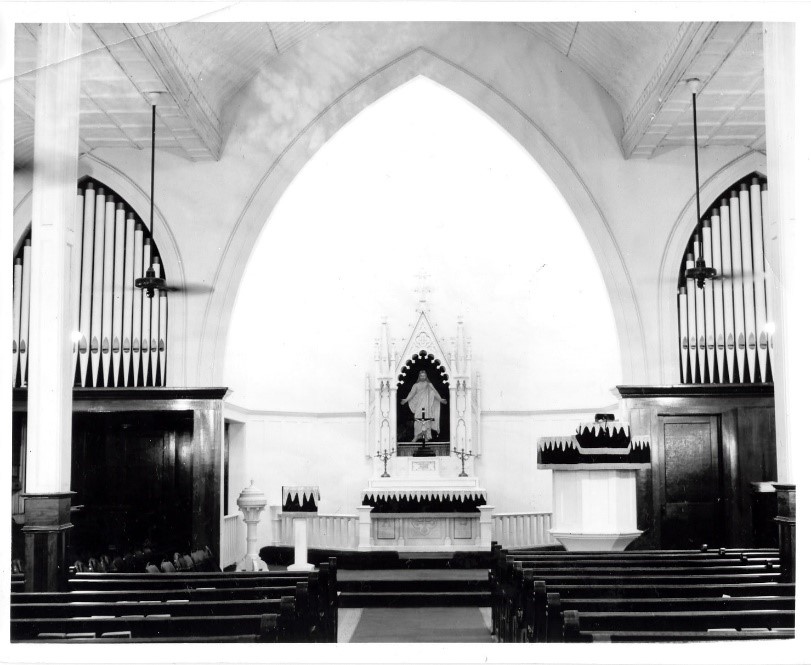
At Trinity Lutheran in Houston, a new pipe organ was a capstone to a music ministry that consisted of “fine musical programs,” with Prof. E. Schultze as the organist and the pastor, Rev. J. W. Behnken, future president of the LCMS, listed as the choir director. Carl Halter, noted musician, professor, liturgical scholar, and administrator at Concordia Chicago, received his first call after graduation to Trinity, Houston, where he was a teacher and musician for a time during the 1930s.
Choirs and choral singing beyond congregational hymnody required decades to gain traction in Texas Lutheran churches. Jan Kilian never mentioned directing a choir as part of the Serbin cantor’s duties, but he did find great utility in Carl Teinert’s violin playing, an instrument that definitely found liturgical use in Texas. In these early days, the congregation was the choir, which, of course, well reflects Lutheran liturgical theology.
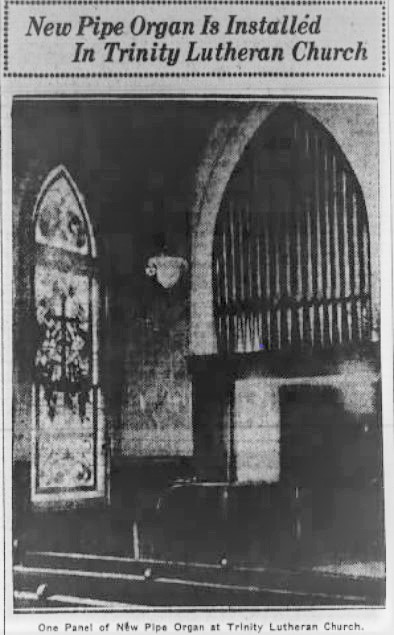
Post, July 17, 1922.)
In this chapter, we explore some of these early organs, and examine the primary sources to see how they might have been employed liturgically.
 JoyfulSingingBook