Intertwining Fortunes–The First Lutheran Church–Missouri
Synod Worship in Texas
The story of the LCMS in Texas must begin outside of both Texas and Missouri Synods, the narrative at times tending to complexity, beginning as it does with the Prussian and Saxon immigration to Texas. The first wave of immigrants arrived in Texas on December 16, 1854—some 460 Wendish souls whose venture into the New World was inspired by a desire for religious liberty and the freedom to practice their “Old Lutheran” faith. They were led by Rev. Jan (Johann) Kilian, the “Father” of the LCMS in Texas.

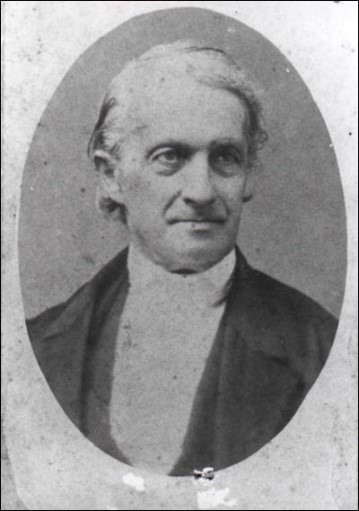
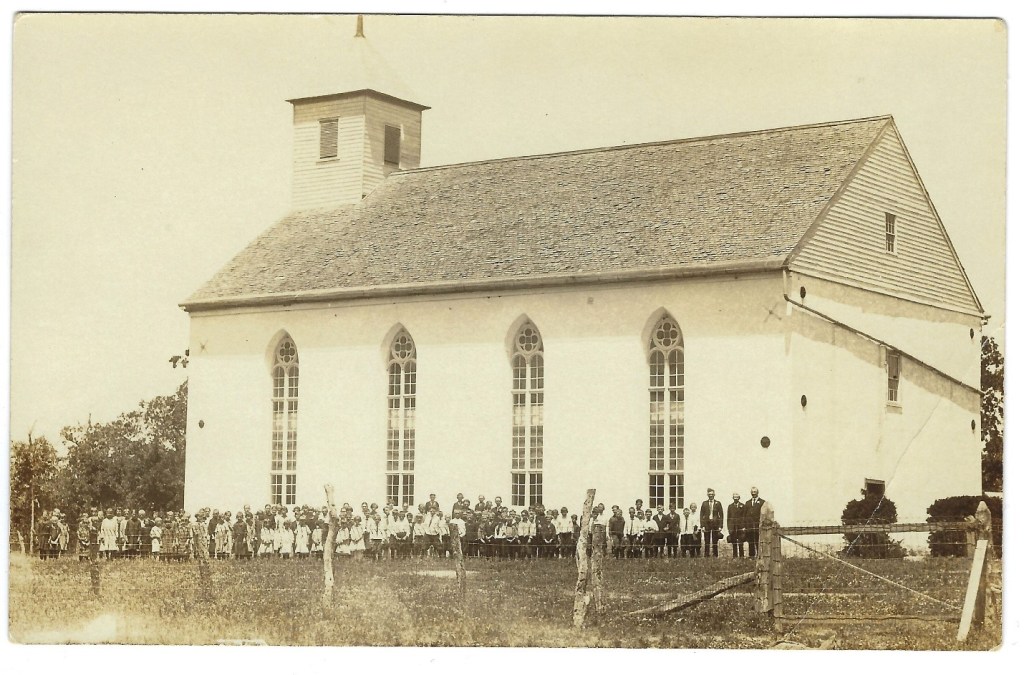
Kilian was acquainted with matters of music and held firm opinions about the proper execution of the Lutheran liturgy. A prolific writer, during the late 1830s and throughout the 1840s he produced a constant stream of hymns and sacred poetry, culminating in Spĕwarske wjesele (“Joyful Singing“), a collection of poems first published in 1847. The colonists would settle in the post oak forests of Serbin, Texas, establishing St. Paul Lutheran Church.
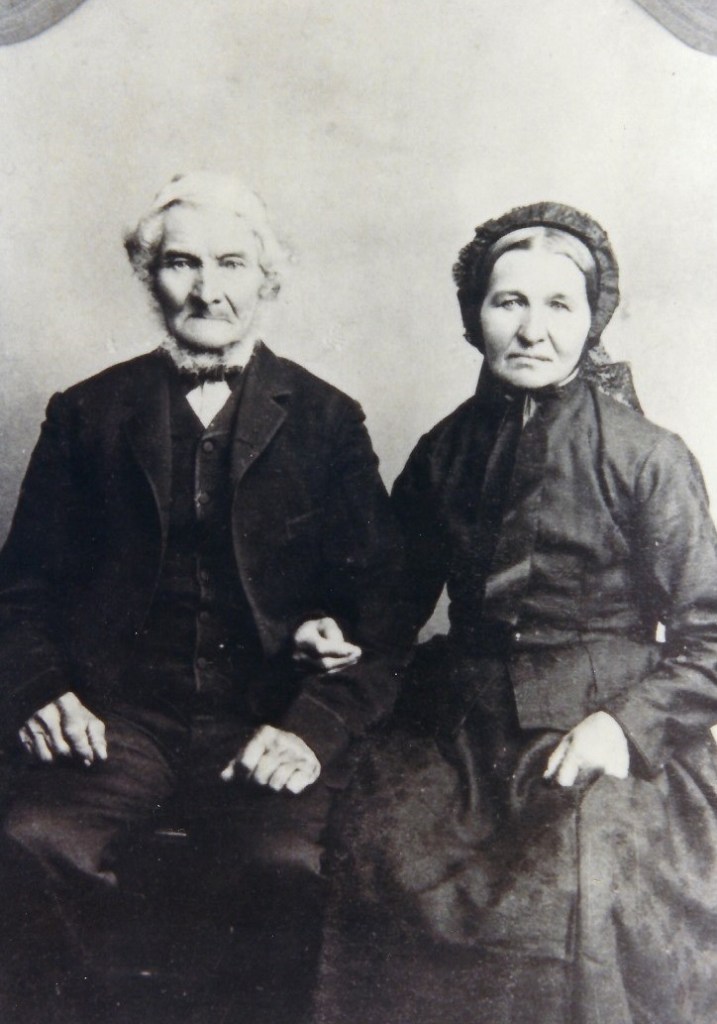
Johann Carl Teinert, a farmer and fellow immigrant, had helped Kilian gather a congregation of Old Lutherans together in Dauben, Prussia, which ultimately resulted in the group’s immigration to Texas. He had served as organist and cantor for Kilian in Europe and would reprise that role after settling in Texas. Teinert may be considered the first person to exercise the office of Lutheran cantor in Texas. He sang and played organ and violin.
Jan Kilian had joined the LCMS in 1855, finding it a haven of orthodox practice relative to the unionism and unfettered pietism he perceived in the nascent Texas Synod, which had already enticed away other German immigrant groups. Yet the Serbin congregation itself had remained officially unaffiliated, possibly due to latent friction between the German and Wendish constituencies.
Indeed, so important were worship practices to each ethnic group, that great controversy came from how to sing. Germans preferred the rhythmic, original versions of the chorales, while the Wends preferred the isometric, rhythmically-even settings of the tunes. This conflict engendered so much controversy that St Paul’s in Serbin even split to accommodate the different factions.
Amidst this struggle, Kilian and St Paul’s called a teacher/cantor from the Addison Seminary in Ilinois, the predecessor institution to Concordia Chicago. Kilian hoped calling the 21-year old Ernst Leubner would relive Kilian of his school teaching duties, and would help Teinert with the church’s music. Unfortunately, the German-born Leubner would unwittingly exacerbate the tensions between the German and Wendish cultures, especially as Kilian attempted to teach him the “Wendish way of singing,” which turned out to be quite unique.

Controversy soon swirled among Kilian, Leubner, and Teinert, who felt somewhat threatened by the younger man. Leubner had to learn Wendish and a new way of singing hymns, and Kilian had to mediate between the two. Eventually, Teinert would break away to help establish a new congregation at Warda. Leubner lasted only a few years before he also found greener pastures. Kilian was not without some consolation, however. His son, Gerhard, had been studying for the Lutheran teaching ministry at the Addison Seminary, preparing to return to Serbin to help in the school and with church music. To that end, Kilian prepared a Choralbuch of hymns–written in the “Wendish manner” of singing, to help his son, and any other subsequent musician, to master the Wendish practices. That book, which exists only in one manuscript copy, is a window into the world of singing and hymnody of these early Texas Lutherans.
In this chapter, we further explore the contents of this manuscript.
Click here to view a few representative pages from this unpublished volume.
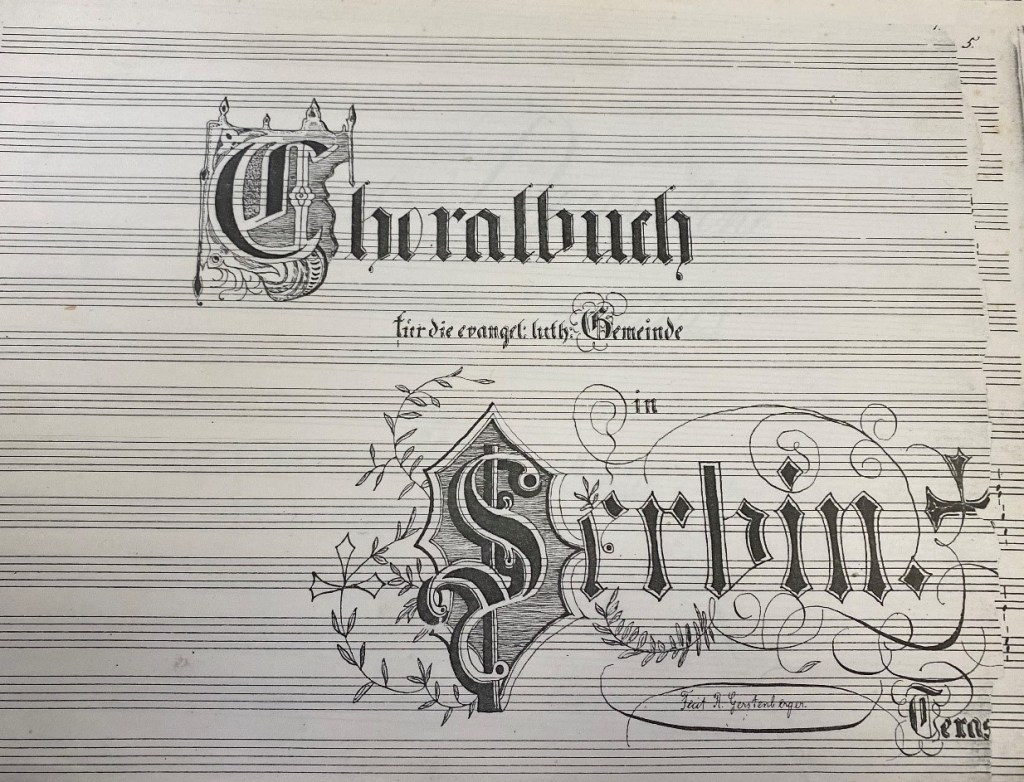
 JoyfulSingingBook